Collection: Hallux Valgus
Hallux valgus means that the big toe points inward toward the other toes, which can lead to a painful lump called a bunion. This condition can be worsened by tight or high-heeled shoes and cause tenderness, swelling, and pain when bearing weight.
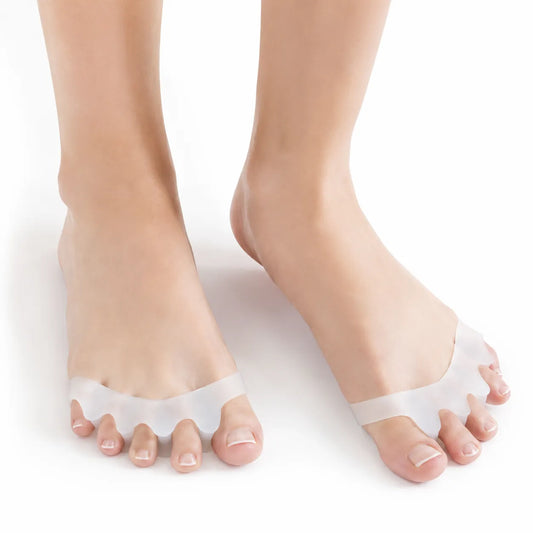
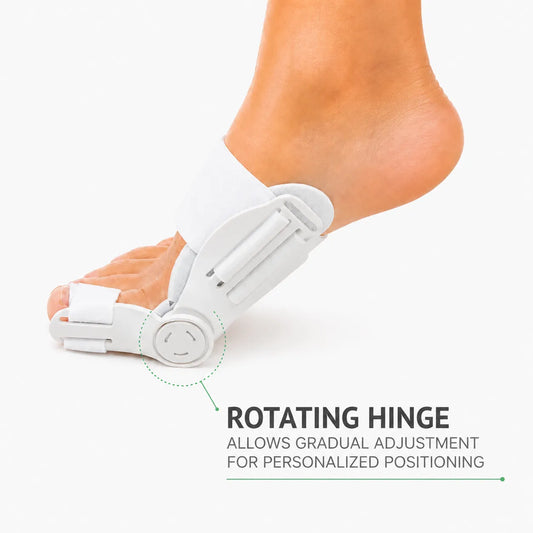
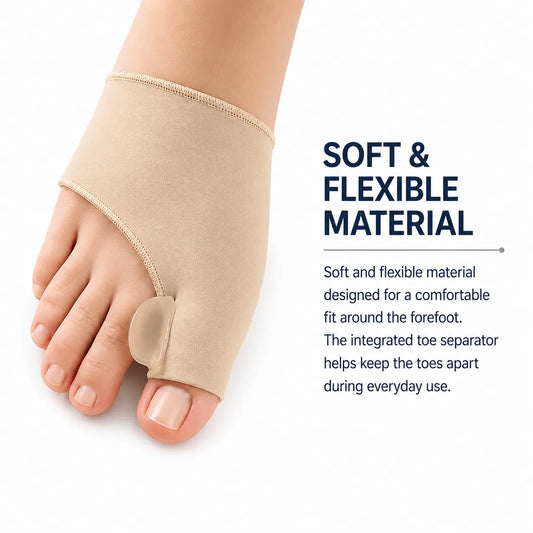
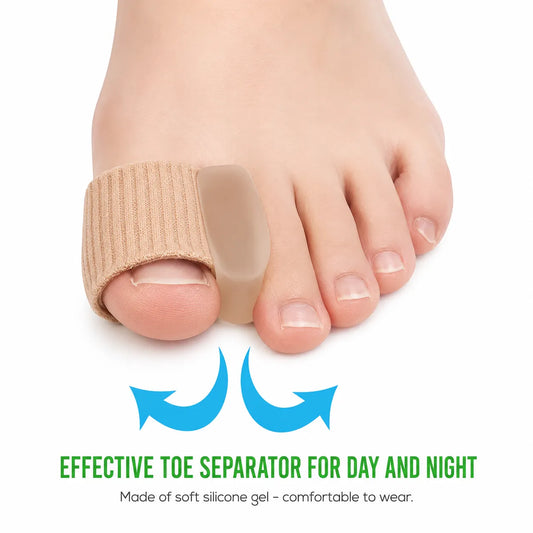
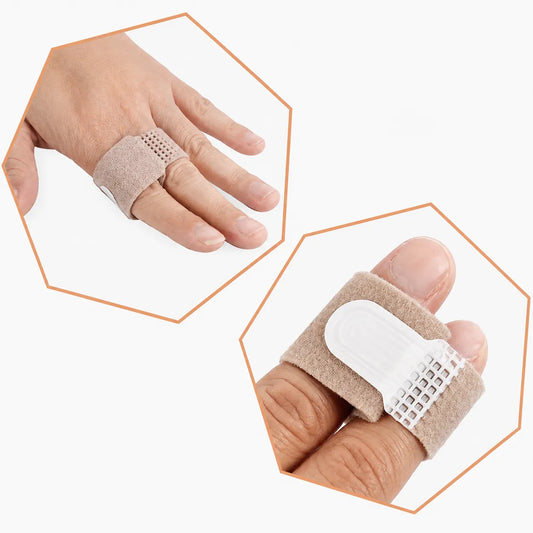
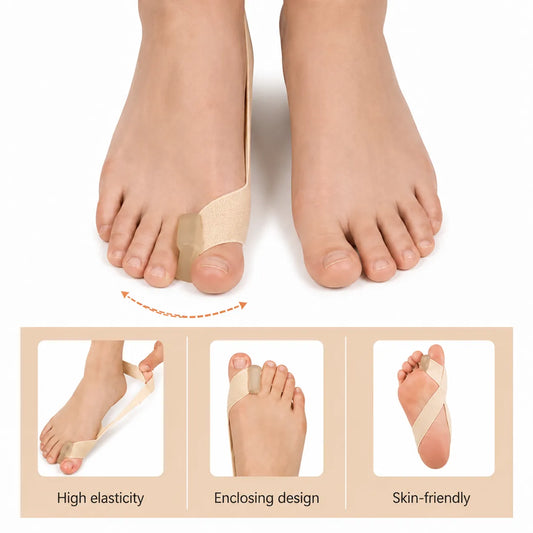
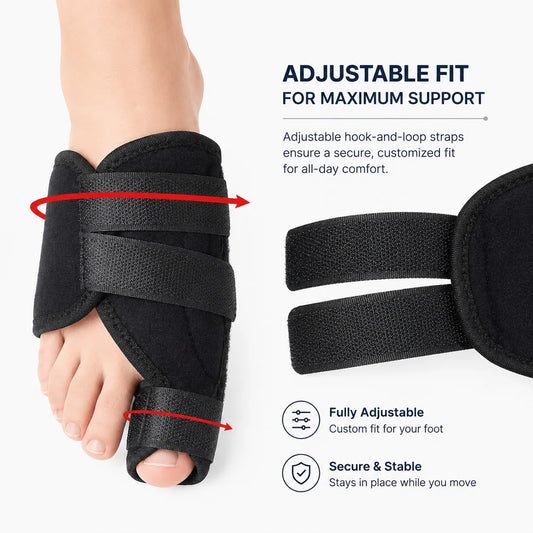
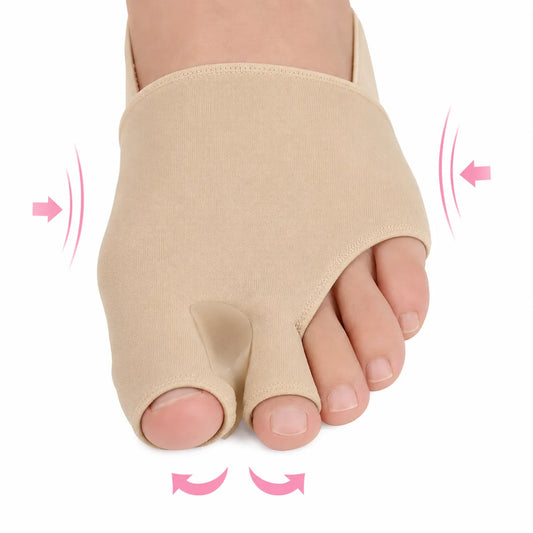
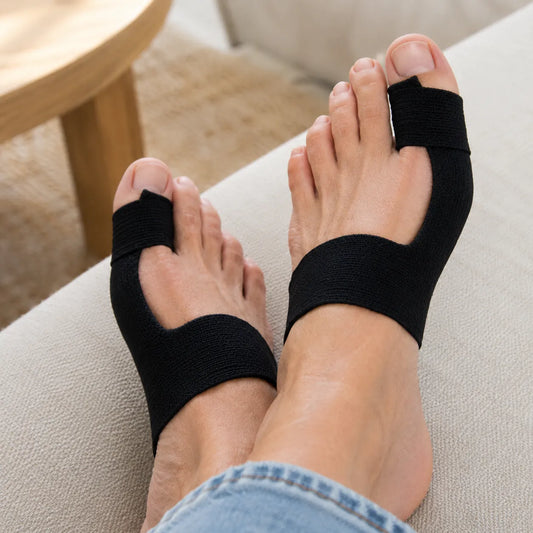
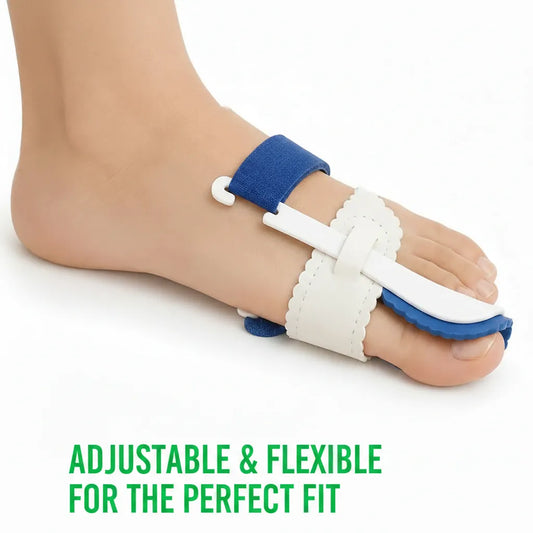
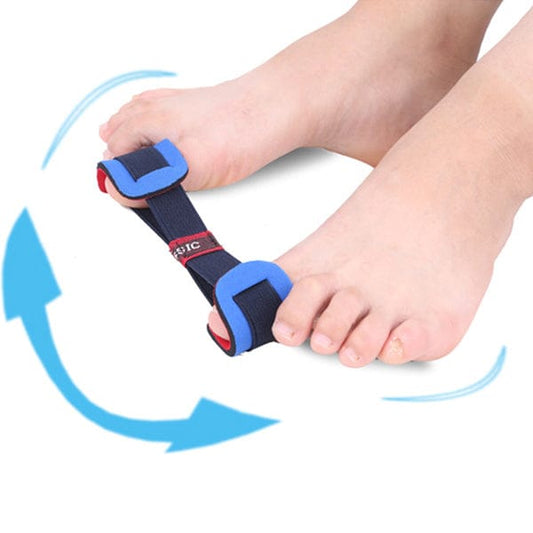
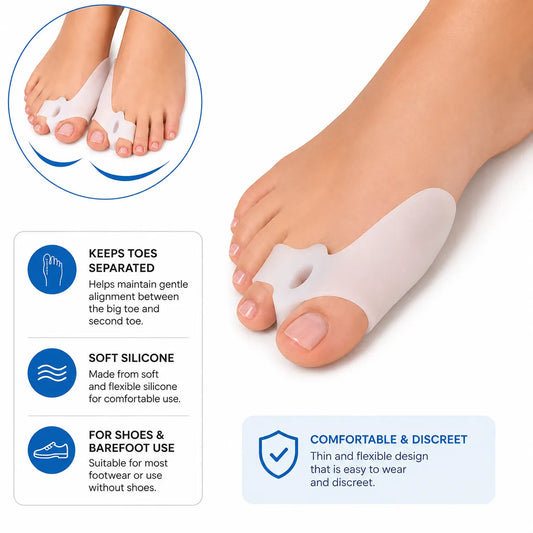
Here you will find carefully selected products such as toe separators, gel pads, and insoles designed to relieve hallux valgus and make everyday life more comfortable.
-
Best Seller
Spara 20%
- Bestseller
- Bestseller
-
Best Seller
Spara 27%
- Best Seller
- Best Seller
- Best Seller
- Best Seller
What is hallux valgus?
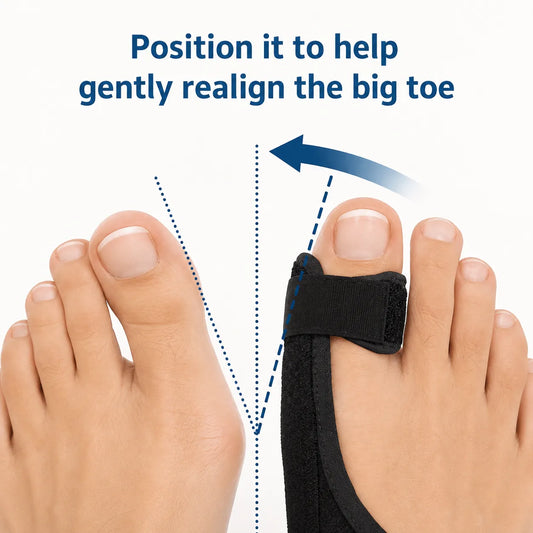
Hallux valgus means that the big toe gradually angles toward the other toes while a bunion forms on the inside of the foot. It is one of the most common misalignments of the foot and can cause both pain and discomfort in everyday life.
When the big toe changes position, the forefoot becomes wider, which often causes regular shoes to press and rub. Many people therefore have difficulty finding shoes that fit comfortably.
Common symptoms of hallux valgus
The symptoms often develop gradually and can range from mild to more severe. Common symptoms include:
- A misaligned big toe that is pushed toward the other toes
- A prominent bunion on the inside of the foot
- Pain caused by pressure from shoes
- Redness and irritation around the joint
- Difficulty finding shoes that fit
The pain is often caused by pressure and friction against the bunion, especially during prolonged standing or walking.
Why do people get hallux valgus?
The cause of hallux valgus is often a combination of several factors. The condition commonly develops over time.
Common causes include:
- Heredity (a strong contributing factor)
- Tight or narrow shoes
- Collapsed arch
- Incorrect weight distribution when walking
- Overloading of the forefoot
The condition is more common in women and increases with age.
How to relieve the symptoms
In most cases, treatment begins by reducing pressure on the big toe joint and relieving the foot.
You can do this by:
- Wear wider and more stable shoes
- Reduce pressure on the bunion
- Support the foot's natural position
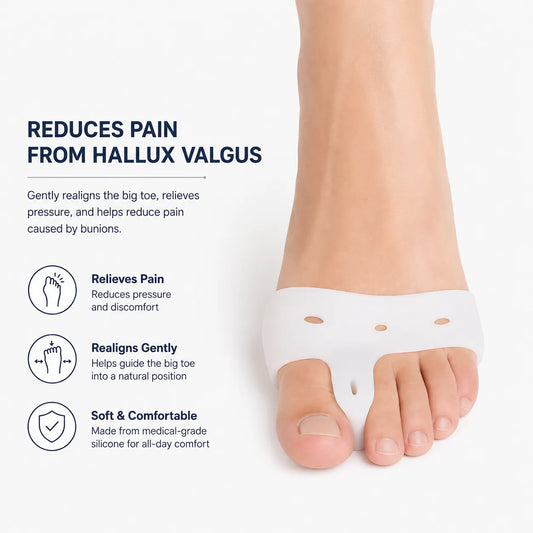
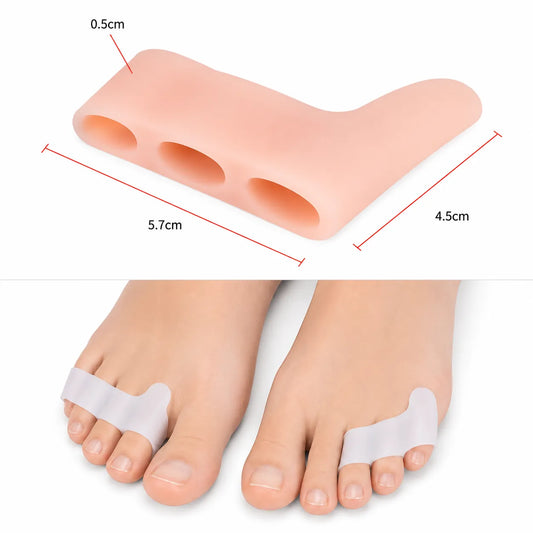
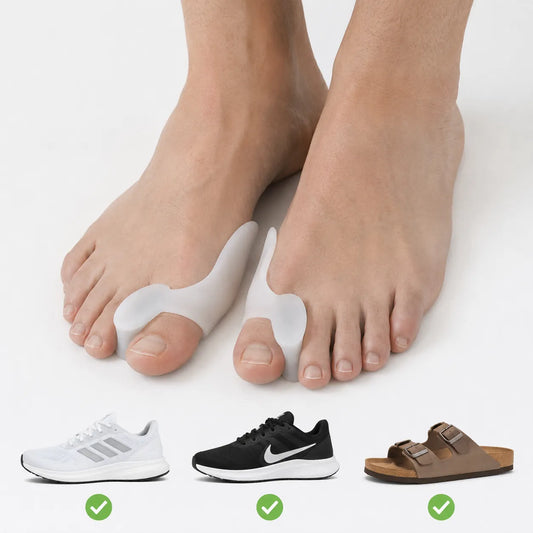
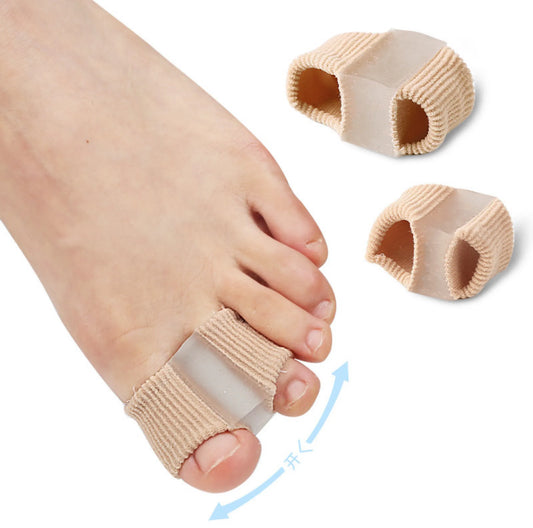
Many people experience noticeable relief with toe separators or protectors that keep the toes in a more natural position and reduce friction. A good example is our Toe Separator for Hallux Valgus , which helps separate the toes and relieve pressure on the bump.
For additional relief, you can also combine these with products such as foot supports or insoles that provide better weight distribution across the forefoot.
What works best for hallux valgus?
What usually works best is a combination of offloading and support in everyday life.
Common solutions include:
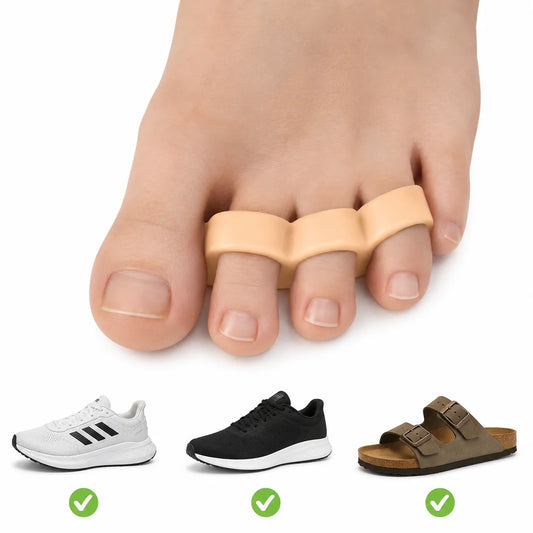
- Toe separators that reduce pressure between the toes
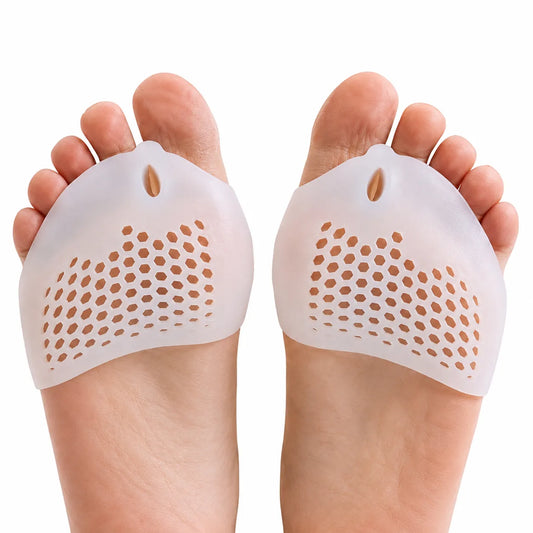
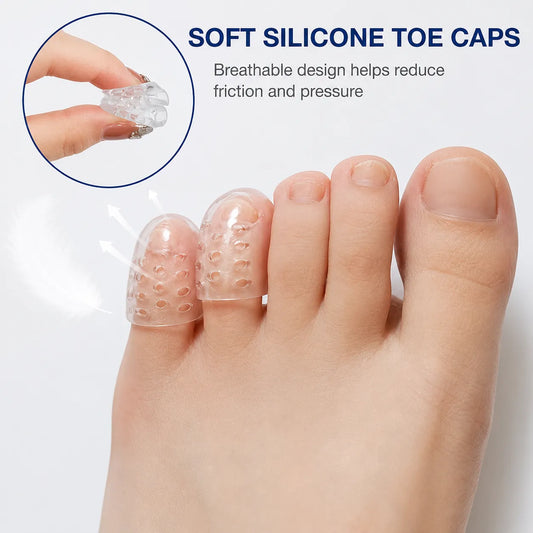
- Protectors that relieve pressure on the bump from shoes
- Insoles that provide better support for the forefoot
- Shoes adapted to provide more room
The aim is to reduce pain and slow the progression of the deformity.
Can hallux valgus go away?
Hallux valgus usually does not go away on its own, but the right measures can reduce symptoms and slow its progression.
In mild to moderate cases, self-care and offloading are often sufficient. In more severe cases, surgery may be considered, but it is usually the last step when other measures are not enough.
When should you take action?
If you experience pain in the big toe joint, notice that the big toe is beginning to angle inward, or have difficulty finding comfortable shoes, it is important to take action early.
The sooner you reduce the strain and provide your foot with the right support, the greater the chance of slowing its progression and avoiding more extensive problems later on.
Frequently asked questions about hallux valgus
What is hallux valgus?
It is a deformity in which the big toe angles inward toward the other toes and a bump forms on the side of the foot.
What does hallux valgus feel like?
It often feels like pain or pressure over the big toe joint, especially when wearing shoes.
What helps the fastest?
Offloading, wider shoes, and supportive aids often provide quick relief.
Can you exercise with hallux valgus?
Yes, but it is important to avoid activities that increase the pain.
Do you have to have surgery?
No, most people manage with self-care. Surgery is only considered for more severe problems.
Read more: Information about Hallux Valgus on 1177
What is hallux valgus?
The diagnosis hallux valgus means that the big toe gradually turns inward toward the other toes. When the toe changes direction, a bony protrusion often forms on the inside of the foot, known as a bunion. The lump may become red, tender and irritated with weight-bearing or pressure from shoes. The deformity usually develops slowly and is more common in women than men. Heredity, narrow shoes and prolonged strain are common causes of a crooked big toe.
Common symptoms & complications
Symptoms vary from person to person. For many people, it starts with mild irritation that then worsens if the foot is not relieved in time. Typical symptoms include:
- Tenderness or pain at the base of the big toe
- Pressure or chafing from shoes
- Redness and swelling around the lump
- Stiffness and reduced mobility
- Side effects caused by other parts of the foot taking over the load
Non-surgical treatment
Most people with hallux valgus find relief with simple, non-surgical measures. The aim is to reduce pressure on your lump, relieve the big toe and give the foot better support in everyday life.
Toe separators
Toe separators help the big toe find a more natural position and reduce friction inside the shoe. Regular use can:
- Relieve pain when walking and standing
- Reduce irritation from shoes
- Slow the progression of hallux valgus
They can be used both in shoes and at home, and are often combined with other pressure-relieving aids.
Orthotic insoles and forefoot supports
How the foot bears weight affects the development of hallux valgus. Insoles that support the arch and relieve the forefoot can:
- Reduce pressure on the lump
- Distribute the load more evenly
- Prevent secondary problems in the knee, hip or back
In this category, you will find insoles and soft protectors specially designed for hallux valgus and other forefoot problems.
Can it be prevented from getting worse?
Hallux valgus does not go away on its own, but its progression can be slowed and symptoms significantly relieved. Helpful measures include:
- Choose shoes with a wide toe box and soft material
- Avoid high heels in everyday life
- Use toe separators regularly
- Relieve the foot with insoles or protectors
- Take breaks during prolonged walking or standing
- Early measures often make a big difference.
Frequently asked questions about hallux valgus
Does hallux valgus go away on its own?
No. The big toe joint deformity is progressive and does not return to normal without intervention. However, pain can be relieved and progression slowed with the right aids and pressure relief.
Do you always need surgery?
Surgery is mainly considered when the problem significantly affects everyday life despite self-treatment. For many people, toe separators, insoles and adapted shoes are enough to provide lasting relief and allow them to remain active without surgery.
Can hallux valgus be prevented?
Prevention is primarily about reducing strain on the forefoot and avoiding factors that drive the deformity. Some simple measures that can make a big difference over time include:
- Choose shoes with a wide toe box so that the toes are not squeezed together; avoid tight shoes.
- Avoid high heels in everyday life because they shift body weight toward the forefoot.
- Use toe separators regularly to keep the big toe in a straighter position.
- Support the arch with orthotic insoles if you have overpronation or flat feet.
- Rest and relieve the foot during prolonged standing or walking to reduce irritation in the joint.
By combining better shoe choices with pressure-relieving aids, progression can be slowed and the risk of future problems significantly reduced.
Does surgery always lead to a successful result?
No, surgery for hallux valgus often produces good results, but there are no guarantees. Many people experience less pain and improved function, but some may have persistent symptoms, stiffness or recurrence of the deformity over time. The result depends, among other things, on the surgical method, rehabilitation and how the foot is loaded after the procedure.